


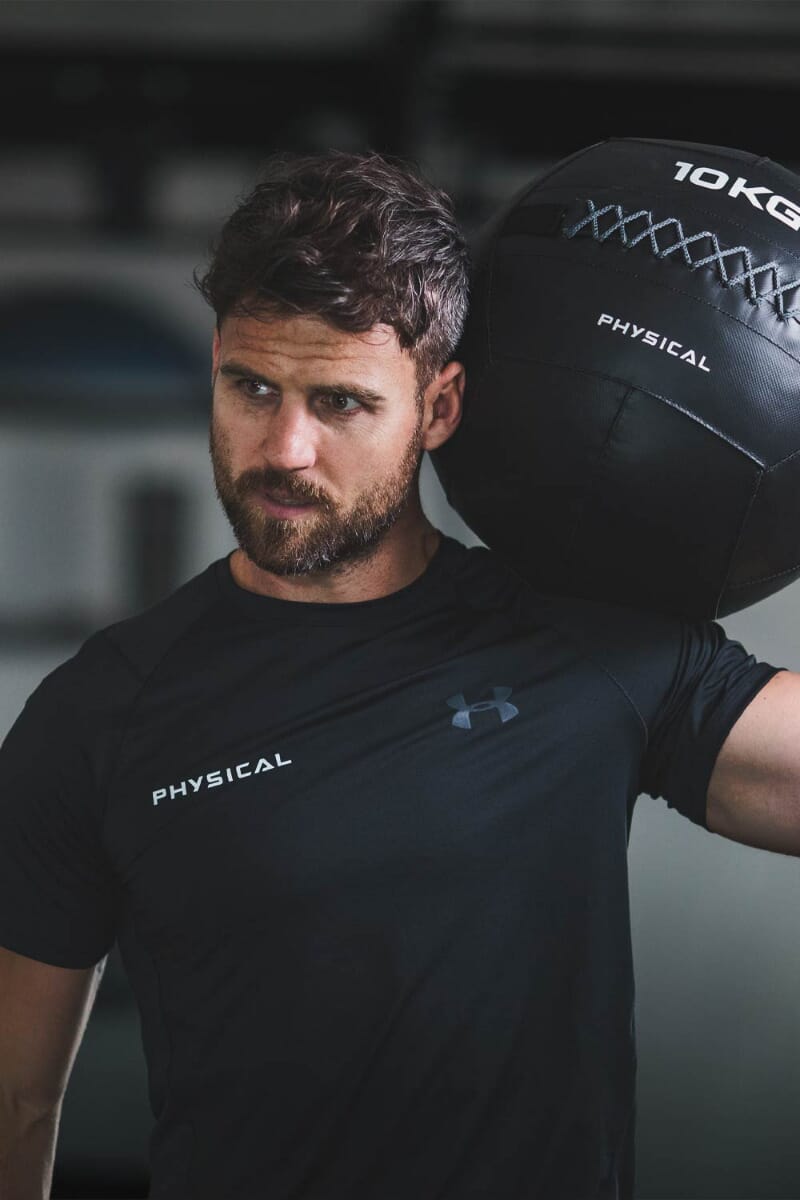
Slam Balls
Slam balls are weighted training balls designed specifically for high-impact exercises such as overhead slams, rotational throws and explosive power movements. Unlike medicine balls, they are built to withstand repeated impact with the floor, making them ideal for strength and conditioning, HIIT and functional training.
Slam balls help develop strength, power, muscular endurance, coordination and cardiovascular fitness. Suitable for users of all abilities, they can be incorporated into everything from rehabilitation and general fitness to athletic performance and high-intensity conditioning programmes.
Slam balls are designed to be thrown forcefully at the ground and withstand repeated impact, whereas medicine balls are intended primarily to add resistance to exercises and partner drills. Medicine balls should not be used for slamming exercises.
Dead-bounce slam balls are designed to stay where they land, providing maximum control during repeated slamming exercises. Live-bounce slam balls rebound after impact, adding an extra coordination and reaction challenge to certain exercises.
Consider the intended training environment, the weight range required and the type of exercises you’ll be performing. Commercial operators should also think about durability, storage solutions and purchasing multiple weights to support classes and different user abilities.
The appropriate weight will depend on the exercise, the user’s experience and the training objective. Lighter balls are often used to develop speed and technique, while heavier balls increase the strength and power demands of an exercise.
Yes. Commercial-grade slam balls are designed to withstand frequent daily use in gyms, studios and functional training facilities, while their compact size and versatility also make them an excellent choice for home gyms.
Slam balls should always be used on suitable gym flooring to help protect both the equipment and the training surface. Avoid using them on rough or abrasive surfaces such as concrete or gravel, which can shorten the lifespan of the ball.
Slam balls should be cleaned regularly using appropriate, non-abrasive cleaning products and inspected periodically for signs of wear or damage. Purpose-designed storage racks help keep training areas organised while protecting the equipment between sessions.
Commercial-grade slam balls can provide years of reliable service when properly maintained. Lifespan will depend on usage levels, training environment and the surfaces on which they are used, but quality products are designed to withstand frequent daily use.